
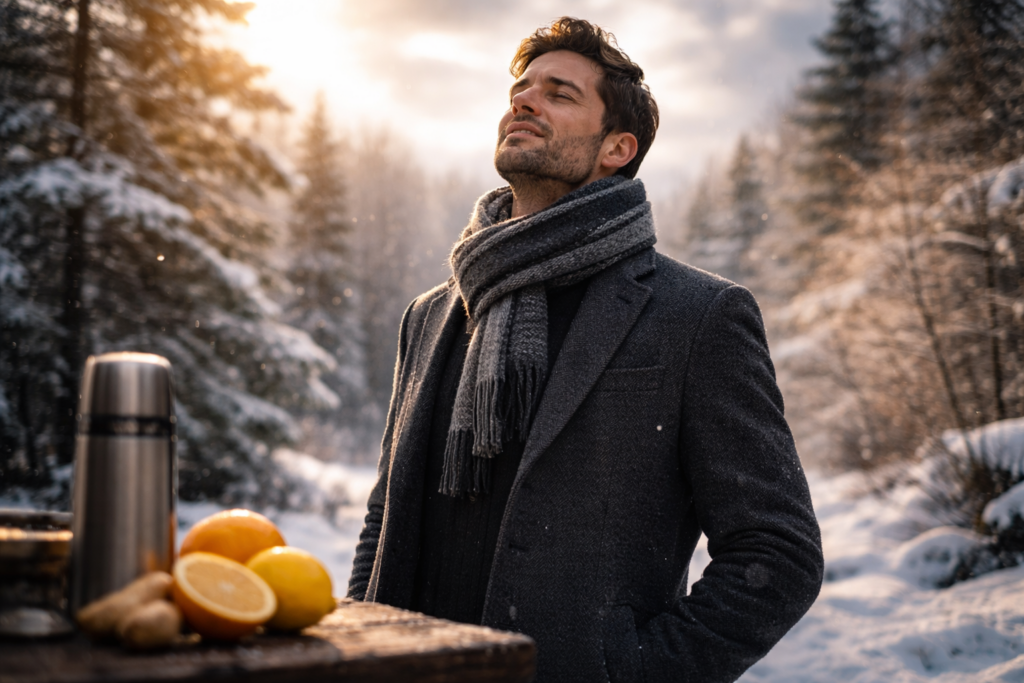
Every winter follows the same script for too many men: a cold that lingers for two weeks, a flu that wipes out a long weekend, a cycle of “fighting something off” that drags through January and February like a low-grade tax on everything — work output, training progress, sleep quality, mood, and patience. The frustrating part isn’t the illness itself. It’s the suspicion that it was preventable. Winter immunity for men isn’t about finding a miracle supplement or white-knuckling through cold season on willpower. It’s about understanding the specific biological, behavioral, and nutritional factors that make men more vulnerable during winter months and systematically closing those gaps before the first wave of seasonal illness arrives. Men’s immune systems respond differently to infection than women’s, are affected by hormonal patterns that shift seasonally, and are disproportionately undermined by lifestyle habits that tend to worsen in winter — reduced sunlight exposure, less physical activity, poorer sleep, higher alcohol intake, and increased stress.
This guide covers what actually works, what’s overhyped, and exactly how to build a cold-weather immune defense that holds up from November through March.
Why Men Get Hit Harder in Winter
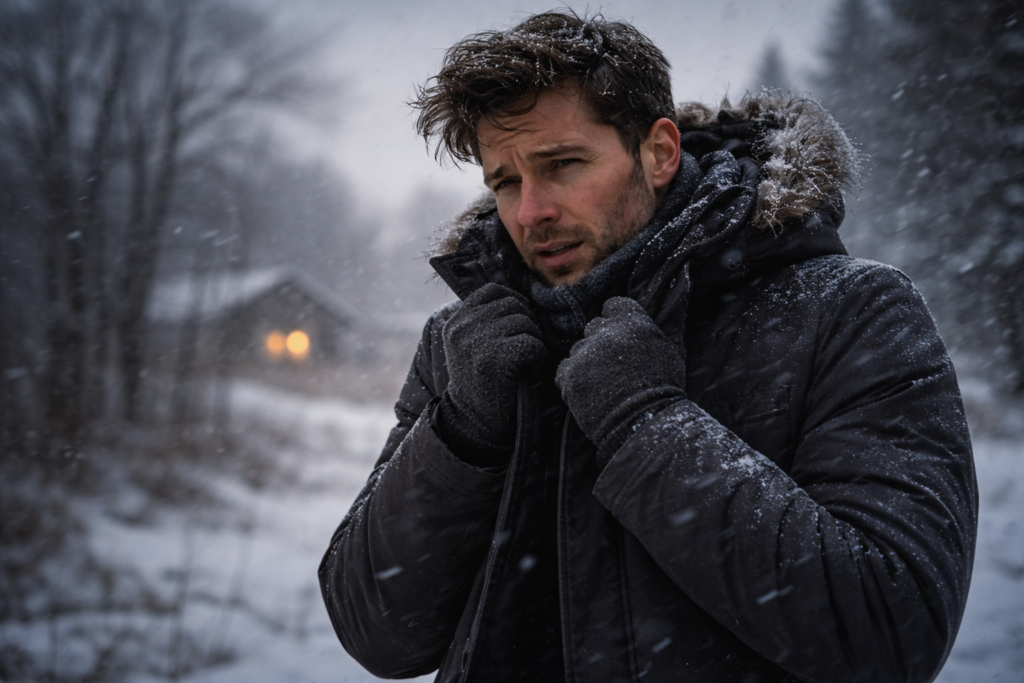
This isn’t anecdotal. Research consistently shows that men mount weaker immune responses to many common respiratory infections, including influenza and several strains of the common cold. Part of the explanation is hormonal: testosterone, while essential for muscle mass, bone density, and metabolic health, has an immunosuppressive effect at higher concentrations. Estrogen, conversely, tends to enhance certain immune responses — giving women a measurable advantage in fighting off many viral infections, albeit at the cost of higher autoimmune disease risk.
Beyond hormones, behavioral patterns widen the gap. Men are statistically less likely to wash hands frequently, less likely to seek early medical attention when symptoms appear, more likely to “push through” illness with insufficient rest, and more likely to maintain habits — heavy alcohol consumption, sleep deprivation, nutritional neglect — that quietly erode immune function over time. None of these factors are fixed. Every one of them is modifiable, and winter is the season where modification pays the highest dividends.
The Nutritional Foundation: What Your Immune System Actually Needs
Immune function is metabolically expensive. Your body requires specific raw materials to produce white blood cells, manufacture antibodies, maintain mucosal barriers in the respiratory tract, and coordinate the inflammatory response that neutralizes pathogens. When those raw materials are missing or insufficient, the system underperforms — and winter diets, with their tendency toward heavier comfort food and fewer fresh vegetables, often create exactly those shortfalls.
Vitamin D: The Winter Deficit That Changes Everything
Vitamin D is arguably the single most important nutrient for winter immune defense, and it’s the one men are most likely to be deficient in during cold months. Your skin synthesizes vitamin D from UVB sunlight exposure, and from roughly October through March in most northern latitudes, UVB intensity is too low to trigger meaningful production — regardless of how much time you spend outdoors.
The consequences are measurable. Vitamin D activates T cells, the adaptive immune system’s primary pathogen-killing force. Without adequate vitamin D, T cells remain in a dormant, naive state and fail to mobilize effectively against viruses and bacteria. Multiple meta-analyses have found that vitamin D supplementation reduces the risk of acute respiratory infections, with the strongest protective effect in people who were deficient at baseline.
For most men, 2,000 to 5,000 IU of vitamin D3 daily during winter months is a well-supported supplementation range. Ideally, get your 25-hydroxyvitamin D blood level tested and aim for a level between 40 and 60 ng/mL. Pair vitamin D3 with vitamin K2 (MK-7 form, 100–200 mcg) to support proper calcium metabolism and avoid the arterial calcification risk associated with long-term high-dose D supplementation without K2.
Zinc: The Gatekeeper of Immune Cell Function
Zinc is involved in virtually every branch of the immune system. It supports the development and function of neutrophils, natural killer cells, and T lymphocytes, and it plays a direct role in maintaining the integrity of skin and mucosal barriers — your body’s first physical line of defense against airborne pathogens.
Men lose zinc through sweat at higher rates than women, and men who train hard, consume alcohol regularly, or eat a diet low in red meat, shellfish, and seeds are at particular risk for suboptimal zinc status. A daily intake of 15 to 30 mg of supplemental zinc (in the forms of zinc picolinate, zinc bisglycinate, or zinc citrate for best absorption) during winter provides a meaningful safety net. Avoid exceeding 40 mg daily from all sources long-term, as chronic excess zinc can deplete copper and paradoxically suppress immune function.
Vitamin C: Useful but Overrated in Isolation
Vitamin C supports immune cell function and acts as an antioxidant that protects immune cells from oxidative damage during the inflammatory response. However, the popular belief that mega-dosing vitamin C prevents or cures colds is not well supported by evidence. Regular intake of 200 to 500 mg daily — easily achievable through diet (bell peppers, citrus, kiwi, broccoli, strawberries) or a modest supplement — is sufficient to maintain tissue saturation. Doses above 1,000 mg offer no additional immune benefit for most people and can cause gastrointestinal discomfort.
Protein: The Overlooked Immune Fuel
Antibodies are proteins. Cytokines are proteins. The receptor molecules that immune cells use to identify and target pathogens are proteins. An immune system fighting an active infection increases its protein demand significantly, and men who are already under-eating protein — especially during a winter cut or during periods of high training volume — are handing their immune system a resource deficit at the worst possible time.
A baseline intake of 0.7 to 1.0 grams of protein per pound of body weight daily supports both immune function and the muscle maintenance that most active men care about. During active illness, don’t reduce protein intake even if appetite drops — prioritize easily digestible protein sources like bone broth, Greek yogurt, eggs, and protein shakes.
Sleep: The Immune Variable Men Sacrifice First
Sleep is the single most powerful immune modulator available to you, and it costs nothing. During deep sleep, your body releases cytokines that promote immune cell production and activity. It redistributes T cells and natural killer cells to lymph nodes where they can be rapidly deployed against detected threats. It consolidates immunological memory so your body responds faster to previously encountered pathogens.
Cutting sleep short reverses all of this. A landmark study from the University of California, San Francisco found that adults sleeping fewer than six hours per night were 4.2 times more likely to catch a cold when exposed to a rhinovirus than those sleeping seven or more hours. Not slightly more likely — four times more likely. That’s a stronger effect size than almost any supplement on the market.
Winter makes sleep both more biologically available (longer nights, increased melatonin production) and more behaviorally disrupted (holiday schedules, year-end work stress, increased screen time during short days). Protecting 7 to 9 hours of quality sleep is the highest-return immune investment you can make.
Sleep Tactics for Winter
Keep your bedroom cool even though instinct says to crank the heat. Sleep quality degrades above 68°F. Use a warm comforter on a cool body rather than a warm room on a warm body. Maintain a consistent sleep-wake schedule through the holiday season — social jetlag from late weekend nights and recovery sleep-ins desynchronizes your circadian rhythm and dampens immune function for days afterward. If you’re waking up tired despite adequate hours, suspect sleep-disordered breathing, which is more prevalent in men and significantly impairs immune recovery. A sleep study is one of the most underutilized diagnostic tools in men’s health.
Training Smart: The Exercise-Immunity Sweet Spot
Regular moderate exercise enhances immune surveillance — the ongoing patrol function of your immune cells — and reduces systemic inflammation. But the relationship between exercise and immunity is not linear. It’s a J-curve.
Moderate, consistent training (30 to 60 minutes of moderate-intensity exercise most days) sits at the bottom of the curve, where immune function is highest. Sedentary behavior raises the curve on one side, increasing vulnerability through metabolic and inflammatory pathways. Overtraining raises it on the other, creating transient immunosuppression through elevated cortisol, depleted glutamine, and mucosal IgA suppression — the so-called “open window” period after prolonged intense exertion when respiratory infection risk spikes.
Winter is when men are most likely to fall to one extreme or the other: either hibernating into near-total inactivity or overcompensating with aggressive indoor training blocks that exceed their recovery capacity.
The immune-optimized approach during cold and flu season is to maintain your training volume and frequency at a sustainable, moderate level, prioritize recovery between sessions, and temporarily scale back intensity if you notice early signs of illness — sore throat, unusual fatigue, disrupted sleep. Training through a genuine systemic illness (fever, body aches, swollen lymph nodes) is not toughness. It’s immunological self-sabotage.
Stress, Alcohol, and the Habits That Quietly Destroy Winter Immunity
Chronic Stress
Sustained psychological stress elevates cortisol, which directly suppresses lymphocyte proliferation and reduces the activity of natural killer cells. Winter compounds stress through financial pressure from holiday spending, reduced daylight (which disrupts serotonin and melatonin), seasonal affective patterns, and year-end work deadlines. Daily stress management — even 10 minutes of breathwork, a walk without headphones, or consistent journaling — measurably improves immune markers over weeks.
Alcohol
Alcohol impairs immune function through multiple pathways: it disrupts gut barrier integrity (allowing bacterial endotoxins into the bloodstream), reduces the production and effectiveness of T cells and macrophages, interferes with sleep architecture, and depletes zinc. Winter social calendars amplify consumption through holiday parties, football gatherings, and the cultural normalization of heavy drinking during the festive season. You don’t have to eliminate alcohol entirely, but recognizing that every heavy drinking session creates a measurable immune suppression window of 24 to 72 hours reframes the cost-benefit equation. Limiting intake to moderate levels — no more than two standard drinks per sitting, with multiple alcohol-free days per week — preserves social enjoyment while protecting immune capacity.
Gut Health
Approximately 70% of the immune system’s infrastructure resides in the gut-associated lymphoid tissue. A diverse, well-fed gut microbiome supports immune regulation, while a depleted microbiome — damaged by antibiotic overuse, low-fiber diets, excessive alcohol, and chronic stress — leaves immune function compromised. Prioritize fermented foods (yogurt, kefir, sauerkraut, kimchi), prebiotic fiber from vegetables and whole grains, and varied whole-food intake over probiotic supplements with limited strain diversity.
Frequently Asked Questions
Why do men get sicker than women in winter?
Men generally mount weaker immune responses to many respiratory viruses. Testosterone has an immunosuppressive effect, while estrogen tends to enhance certain immune functions. Behavioral factors compound this biological difference — men are statistically less likely to practice preventive hygiene, seek early treatment, or rest adequately during illness.
What is the best supplement for winter immunity in men?
Vitamin D3 is the most evidence-supported supplement for winter immune defense in men, particularly because winter UVB exposure is insufficient for adequate skin synthesis in most northern latitudes. Zinc and vitamin C provide additional support. No single supplement replaces the combined impact of adequate sleep, balanced nutrition, regular exercise, and stress management.
How much sleep do I need to support my immune system?
Seven to nine hours per night is the range associated with optimal immune function in adults. Sleeping fewer than six hours per night has been shown to increase cold susceptibility by more than four times. Sleep quality matters as much as quantity — fragmented or shallow sleep provides significantly less immune benefit than uninterrupted, deep sleep.
Does exercise boost or hurt immunity in winter?
Both, depending on the dose. Regular moderate exercise enhances immune surveillance and reduces inflammation. Prolonged intense exercise, especially without adequate recovery, temporarily suppresses immune function and increases respiratory infection risk. Consistent moderate training is the immune sweet spot during cold and flu season.
Can alcohol really weaken my immune system?
Yes. Alcohol impairs T cell and macrophage function, disrupts gut barrier integrity, interferes with deep sleep, and depletes immune-critical nutrients like zinc. A single episode of heavy drinking creates a measurable immune suppression window lasting 24 to 72 hours. Moderate intake with regular alcohol-free days minimizes the impact.
How much vitamin D should men take in winter?
Most men benefit from 2,000 to 5,000 IU of vitamin D3 daily during months when UVB exposure is insufficient. The ideal approach is to test your blood level of 25-hydroxyvitamin D and supplement to maintain a level between 40 and 60 ng/mL. Pair D3 with vitamin K2 (100–200 mcg MK-7) for optimal safety and efficacy.
Build Your Winter Defense Now — Not After the First Sick Day
You know what drains your immunity. You know what rebuilds it. The difference between the man who catches everything this winter and the man who cruises through cold season without missing a day is not luck and not genetics — it’s whether these habits are in place before exposure hits.
Download our free Winter Immunity Checklist for Men — a daily tracker covering supplementation, sleep, training, nutrition, and stress management benchmarks tailored specifically to men’s physiology and winter conditions. One page, zero complexity, built to keep you consistent when the season tries to knock you down. Enter your email, grab the checklist, and make this the winter you stop getting sick.