
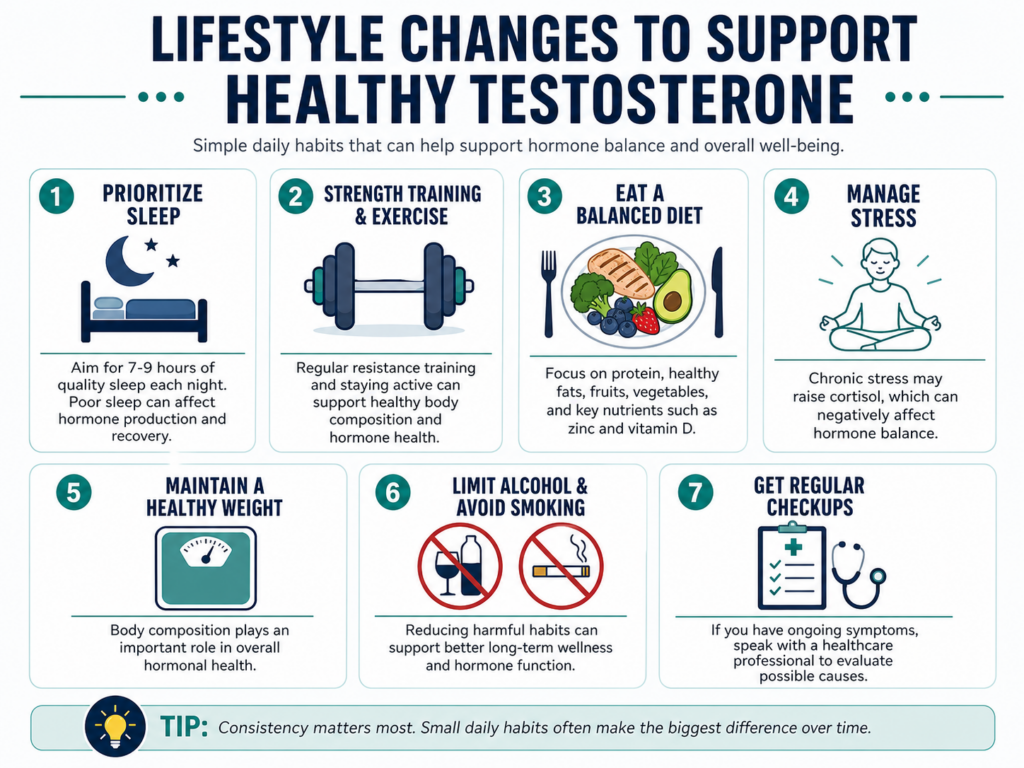
Testosterone doesn’t exist in a vacuum — it responds to how you live. The quality of your sleep, what you eat, how you train, how much chronic stress you carry, and whether you’re maintaining a healthy body weight all influence your body’s ability to produce and maintain healthy testosterone levels. Understanding the lifestyle changes to support healthy testosterone gives men a practical toolkit for protecting their hormonal health — and a clearer picture of when lifestyle alone isn’t enough.
At Men’s Health Solutions, we’ve worked with over 5,000 men in Indianapolis on testosterone therapy, erectile dysfunction, and men’s health optimization. One thing we consistently see is that men who combine clinical treatment with supportive lifestyle habits get better results faster and sustain them longer. But lifestyle changes are also valuable on their own — for men who want to protect their testosterone levels before they decline, and for those whose levels are in the low-normal range who want to avoid dropping further.
Note: This article provides general health and wellness information. It is not a substitute for medical advice. If you’re experiencing symptoms of low testosterone, the most reliable first step is a blood test with a qualified provider to assess your actual hormone levels.
Strength Training Is the Most Reliable Exercise for Raising Testosterone

Exercise is one of the most well-studied lifestyle levers for testosterone, and among all forms of physical activity, resistance training — lifting weights — has the strongest and most consistent evidence behind it. Compound movements that recruit large muscle groups produce the greatest acute testosterone response: squats, deadlifts, bench press, rows, and overhead pressing.
Key principles for exercise and testosterone optimization:
- Train with sufficient intensity. Light, low-effort workouts don’t produce the same hormonal response as training that genuinely challenges your muscles. Working sets taken close to failure — with appropriate rest — drive a stronger testosterone and growth hormone response.
- Prioritize compound movements. Multi-joint exercises that involve the hips, legs, and back recruit the most muscle mass and produce the most favorable hormonal environment. Isolation exercises have their place but shouldn’t dominate your training.
- Train three to five days per week. Consistent training over time produces cumulative benefits for testosterone and body composition. More isn’t always better — overtraining and inadequate recovery can actually suppress testosterone.
- Don’t neglect recovery. The hormonal benefits of training are realized during recovery, not during the workout itself. Programming rest days and managing total training volume is as important as the training itself.
High-intensity interval training (HIIT) also shows positive effects on testosterone and metabolic health, and makes a useful complement to strength training. Chronic endurance training at high volume — marathon training, for example — is associated with lower testosterone in some research and is worth monitoring if you’re already dealing with borderline low levels.
Sleep Is the Single Most Impactful Lifestyle Factor for Testosterone
If there’s one lifestyle change that has the most direct, well-documented effect on testosterone, it’s sleep. The majority of daily testosterone production occurs during sleep — specifically during deep slow-wave sleep cycles. When sleep is cut short, fragmented, or chronically poor in quality, testosterone production takes a direct hit.
Research has demonstrated that restricting sleep to five hours per night for just one week can reduce testosterone levels by 10 to 15 percent in otherwise healthy young men. That’s a meaningful drop from a single week of poor sleep — and most men dealing with low testosterone are working against years of suboptimal sleep habits, not just one bad week.
Practical steps to protect sleep quality and duration:
- Target seven to nine hours per night. Most adults need at least seven hours for adequate hormonal recovery. Consistently sleeping less than six hours is associated with significantly lower testosterone.
- Keep a consistent sleep schedule. Going to bed and waking at the same time — including weekends — stabilizes your circadian rhythm and improves sleep architecture.
- Minimize light exposure before bed. Blue light from screens suppresses melatonin and delays sleep onset. Reducing screen use in the hour before bed or using blue-light-blocking lenses helps protect sleep quality.
- Keep your bedroom cool and dark. Core body temperature drops during quality sleep. A cooler sleep environment — typically 65–68°F — supports deeper, more restorative sleep.
- Address sleep apnea. Obstructive sleep apnea is significantly more common in men with low testosterone and dramatically disrupts sleep quality and hormonal recovery. If you snore heavily, wake frequently, or feel unrefreshed despite adequate sleep time, evaluation for sleep apnea is warranted.
What You Eat Directly Affects Your Hormone Levels
Diet influences testosterone through several mechanisms — providing the raw materials for hormone synthesis, affecting body composition, regulating insulin sensitivity, and modulating inflammation. No single food raises testosterone dramatically on its own, but consistent dietary patterns either support or undermine your hormonal environment over time.
Nutrients That Support Testosterone Production
- Zinc: An essential mineral directly involved in testosterone synthesis. Found in high concentrations in oysters, red meat, poultry, pumpkin seeds, and legumes. Zinc deficiency is associated with reduced testosterone, and many men don’t get adequate zinc from diet alone.
- Vitamin D: Functions more like a hormone than a vitamin and plays a direct role in testosterone production. Men with vitamin D deficiency tend to have lower testosterone. Sources include fatty fish, egg yolks, fortified foods, and sunlight exposure.
- Healthy fats: Testosterone is synthesized from cholesterol, making adequate dietary fat intake important for hormone production. Avocado, olive oil, nuts, seeds, and fatty fish provide the monounsaturated and polyunsaturated fats associated with healthy testosterone levels.
- Adequate protein: Sufficient dietary protein supports muscle mass and metabolic health, both of which positively influence testosterone. It also helps maintain stable blood sugar and prevents the muscle loss associated with caloric restriction.
- Magnesium: Involved in hundreds of enzymatic processes including those related to testosterone metabolism. Found in leafy greens, nuts, seeds, and whole grains. Many men are borderline deficient.
Dietary Patterns That Undermine Testosterone
- Excess sugar and refined carbohydrates: Spiking blood sugar repeatedly throughout the day promotes insulin resistance, increases fat storage, and is associated with lower testosterone over time.
- Chronic caloric restriction: Severely undereating — whether intentional or not — signals scarcity to the body and suppresses testosterone production. Sustainable, moderate caloric management is preferable to aggressive restriction.
- Excessive alcohol: Heavy alcohol consumption directly impairs testicular testosterone production and increases estrogen conversion. Moderate, occasional drinking is not the same concern — but regular heavy drinking is a meaningful testosterone disruptor.
- Highly processed foods: Ultra-processed diets high in industrial seed oils, additives, and low-quality ingredients are associated with systemic inflammation and poor metabolic health — both of which negatively affect testosterone.
Chronic Stress Suppresses Testosterone — Here’s What to Do About It
The relationship between stress and testosterone is direct and well-established. When the body is under chronic stress, it produces elevated levels of cortisol — the primary stress hormone. Cortisol and testosterone operate in opposition: when cortisol is chronically elevated, testosterone production is suppressed. This is an evolutionary trade-off — the body prioritizes immediate stress response over long-term reproductive function when survival feels threatened.
The problem is that modern chronic stress — work pressure, financial anxiety, poor sleep, relationship strain, and constant digital overstimulation — keeps cortisol elevated in a way that our stress response systems weren’t designed to handle long-term. For men already dealing with low testosterone, chronic stress is frequently an aggravating factor that makes the clinical picture worse.
Evidence-supported strategies for managing cortisol and protecting testosterone:
- Regular physical activity: Exercise is one of the most effective stress regulators available. It consumes stress hormones, improves mood, and creates a post-exercise hormonal environment that favors testosterone.
- Mindfulness and breathwork: Structured relaxation practices — including diaphragmatic breathing, meditation, and yoga — have measurable effects on cortisol reduction when practiced consistently.
- Social connection: Isolation and loneliness are associated with elevated cortisol and worse health outcomes across the board. Maintaining meaningful relationships has a genuine protective effect on hormonal health.
- Setting work-life boundaries: Chronic work overload is one of the most common sources of sustained cortisol elevation in men. Protecting time for recovery — including leisure, sleep, and disconnection from work demands — isn’t optional for men serious about their hormonal health.
Can Losing Weight Raise Your Testosterone?
Yes — and meaningfully so for men who are overweight or obese. Adipose tissue (body fat) contains aromatase, an enzyme that converts testosterone into estrogen. The more excess body fat a man carries — particularly abdominal fat — the more testosterone is converted to estrogen, and the lower his free testosterone tends to be. Weight loss reduces aromatase activity, lowers estrogen conversion, and allows free testosterone to rise.
Studies in overweight men have shown that significant weight loss — through sustainable diet and exercise — can produce clinically meaningful increases in testosterone. For some men, addressing excess body weight is the single most impactful lifestyle change they can make for their hormonal health.
The approach matters, however. Crash dieting, extreme caloric restriction, or very low fat intake can actually suppress testosterone even while producing weight loss. The most effective approach combines moderate caloric reduction, adequate protein intake to preserve muscle mass, consistent strength training, and the sleep and stress management practices outlined above.
What Lifestyle Changes Can’t Fix
Lifestyle optimization is genuinely powerful — but it has limits. For men with clinically low testosterone confirmed by lab testing, healthy habits are a supporting role, not the lead. A man with a total testosterone of 200 ng/dL is unlikely to restore his levels to a healthy range through diet and exercise alone, no matter how disciplined the effort.
The honest picture is this: lifestyle changes can help maintain testosterone in the normal range, slow the natural age-related decline, improve how you feel and function at any testosterone level, and enhance the results of clinical treatment when used alongside it. What they typically can’t do is replace the need for testosterone replacement therapy in men with genuinely low levels and symptomatic deficiency.
If you’re making all the right lifestyle choices and still feel like your energy, drive, libido, or mood aren’t where they should be, that’s important information — not a personal failing. It may simply mean your testosterone levels need clinical evaluation and support.
Frequently Asked Questions: Lifestyle and Testosterone Health
Can lifestyle changes alone fix low testosterone?
Lifestyle changes can meaningfully support testosterone production and maintain healthy levels in men whose testosterone is in the low-normal range. However, for men with clinically low testosterone confirmed by lab testing, lifestyle changes alone are rarely sufficient to restore levels to an optimal range. In those cases, testosterone replacement therapy under medical supervision is typically necessary — and works best when supported by healthy habits.
How much does sleep affect testosterone levels?
Sleep has a profound and direct effect on testosterone. The majority of daily testosterone production occurs during deep sleep. Research has shown that restricting sleep to five hours per night for just one week can reduce testosterone levels by 10 to 15 percent in young healthy men. Consistently poor sleep is one of the most common and overlooked contributors to low testosterone.
What foods support healthy testosterone levels?
Foods rich in zinc, vitamin D, magnesium, and healthy fats provide the nutritional foundation for testosterone production. Oysters, red meat, fatty fish, eggs, avocado, nuts, and leafy greens all contribute. Highly processed foods, excess sugar, and regular heavy alcohol consumption are consistently associated with lower testosterone and should be minimized.
Does stress really lower testosterone?
Yes. Chronic stress elevates cortisol, which directly suppresses testosterone production. The relationship is well-documented and bidirectional — men with low testosterone often experience more stress reactivity, and chronic stress makes low testosterone worse. Consistent exercise, adequate sleep, and stress management practices all help lower cortisol and support a healthier hormonal environment.
At what age should men start thinking about testosterone health?
Testosterone begins a gradual natural decline after age 30 at roughly one to two percent per year. This means testosterone health is relevant for men in their 30s — not just those over 50. Building healthy sleep, exercise, diet, and stress management habits early creates the best foundation for maintaining strong hormone health as you age. If you’re experiencing symptoms of low testosterone at any age, a lab test is the most reliable way to assess where your levels actually stand.
Small Consistent Changes Add Up — and So Does Getting the Right Support
Testosterone health is built over time through consistent daily choices — how you sleep, train, eat, manage stress, and maintain your body composition. These habits matter at every stage of a man’s life, and they work whether you’re trying to prevent decline, address symptoms, or get more out of a clinical treatment protocol.
But if you’re doing the work and still not feeling like yourself, Men’s Health Solutions is here to help. Our team has helped over 5,000 Indianapolis men identify and address the root causes of low energy, reduced drive, and declining vitality. Call us at (317) 975-3945, email [email protected], or schedule your visit online — and find out exactly where your testosterone levels stand.